Jewelry Insurance Issues

October 2002

JEWELRY INSURANCE ISSUES (formerly IM News), provides monthly insight and information for jewelry insurance agents, underwriters and claims adjusters.

Subscribe to
Jewelry Insurance Issues

Table of Contents

Click on article titles in red

2008

Garnet—and Its Many Incarnations - January

Organic Gems - February

Do Your Jewelry Insurance Settlements Make You Look Bad? - March

Don't Be Duped by Fake JISO Appraisal - April

Diamonds in the Rough - May

The Cultured Club - June

Sapphire—Gem Superstar - July

It’s a Certified Diamond! 
— But who's saying so?
- August

FTC Decides: Culture Is In! - September

Paraiba Tourmaline – What's in a Name? - October

How Fancy is Brown? - November

2007

Moissanite's New Spin - January

Online Jewelry - Buying and Insuring - February

Blood Diamonds - March

Damaged Jewelry, Don't Assume!- April

Chocolate Pearls - May

Appraisal Puff-Up vs Useful Appraisal - June

It's Art, but is it Jewelry?
- July

Diamonds Wear Coats of Many Colors - August

DANGER! eBay Jewelry "Bargains" - September

TV Shopping for Jewelry - October

Enhanced Emerald: clever coverup - November

How do you like your rubies —
leaded or unleaded?
- December

2006

The New Platinum: A Story of Alloys - January

Ruby Ruse - February

How Big are Diamonds Anyway? - March

GIA Diamond Scandal
Has Silver Lining for Insurers
- April

Watch Out for Big-Box Retailers Insurance Appraisals - May

Mixing It Up: Natural and Synthetic Diamonds Together - June

Tanzanite - Warning: Fragile - July

Red Diamonds - August

Inflated Valuations & Questionable Certificates - September

Emeralds - October

Where Do Real Diamonds Come From? - November

Counterfeit Watches — The Mushroom War - December

2005

The Lure of Colored Diamonds - January

Synthetic Colored Diamonds - February

Watches: What to Watch for - March

When is a Pear not a Pair? - April

The Truth About Topaz - May

White Gold: How White is White? - June

One of a Kind — or Not - July

Jewelry in Disguise - August

Valued Contract for Jewelry? Proceed with Caution! - September

Antiques, Replicas and All Their Cousins
October

Grading the Color of Colored Diamonds
November

New GIA Cut Grade for Diamonds - December

2004

Synthetic Diamonds — and Insuring Tips - January

Bogus Appraisals and Fraud - February

A Picture is Worth Thousands of Dollars - March

Don't be Duped by Fracture Filling - April

Gem Scams Point to Need for Change - May

What is a Good Appraisal - June

4Cs of Color Gemstones - July

Gem Laser Drilling: The Next Generation - August

Why Update an Appraisal? - September

When to Recommend an Appraisal Update or a Second Appraisal - October

Secrets of Sapphire - November

Will the Real Ruby Please Stand Up - December

2003

Mysterious Orient:
A Tale of Loss
- January

Bogus Diamond Certificates and Appraisals - February

Can Valuations be Trusted? - March

Spotting a Bogus Appraisal or Certificate - April

Counterfeit Diamond Certificates - May

Case of the Mysterious "Rare" Sapphires - June

Politically Correct Diamonds - July

Name Brand Diamonds - September

Princess Cut: Black Sheep of Diamonds - October

Reincarnate as a Diamond - November

Synthetic Diamonds - December

2002

Irradiated Mail/Irradiated Gems - January

Fake Diamonds (Moissonite) - February

GIA Diamond Report - March

AGS and Other Diamond Certificates - April

Colored Stone Certificates - May

Damaged Jewelry: Don't Pay for Nature's Mistakes - June

The Case of the "Self-Healing" Emerald - July

Mysterious Disappearance: Case of the Missing Opals - August

The Discount Mirage - September

What Can You Learn from Salvage? - October

Gaining from Partial Loss - November

Year in Review - December

2001

Colored Diamonds - January

Good as Gold - February

Disclose Gem Treatments - March

FTC Jewelry Guidelines - April

Myths Part I: Each Piece is Unique - May

Myths Part II: Myths, Lies, & Half-Truths - June

New Trend: Old Cut Stones - October

The Appraisal Process - November

Year in Review - December

2000

Deceptive Pricing - January

Gems - Natural or Manmade - February

Jeweler/Appraisal Credentials - March

Fracture Filling - April

Salvage Jewelery - May

Gem Treatments - June

Don't Ask/Don't Tell - A Buying Nightmare - July

Laser Drilling of Diamonds - August

Jeweler Ethics or the Lack Thereof - September

Gem Scam - October

The Truth about Clarity Grading - November

Year in Review - December


We'll be glad to notify you when the Jewelry Insurance Issues is available each month. Sign up for your FREE SUBSCRIPTION to Jewelry Insurance Issues.

Visit the rest of the JCRS site:  www.jcrs.com

What Can You Learn from Salvage?

What’s it worth? What can I do with it now?
And even: Was the settlement the most cost-effective solution?

A partial loss is too often a missed opportunity. When a stone is lost or chipped, when jewelry is damaged, when one of a pair of earrings goes missing, insurers may simply replace the piece, paying out the full limit of liability.

That damaged jewelry should always be inspected. A thorough examination frequently discloses details about quality, inherent flaws, and condition of the surviving piece that lead to more cost-effective solutions than full replacement.

Recently a carrier contacted JCRS to evaluate its salvage. We found that in most cases the settlement resulted in overpayment. In 9 of the 19 claims, the adjuster was led to believe something that was not true.

In some cases, jewelers advised that repair was not an option. In others, a jeweler was not even consulted. A few examples:

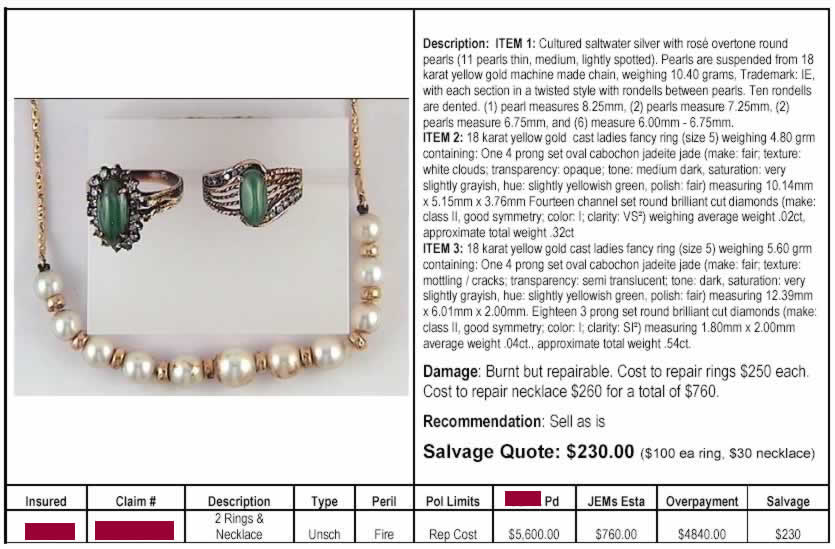
These rings and necklace were
burnt in a fire. The insurer paid out $5,600. The repair would have cost $760. Insurer’s overpayment: $4,840.
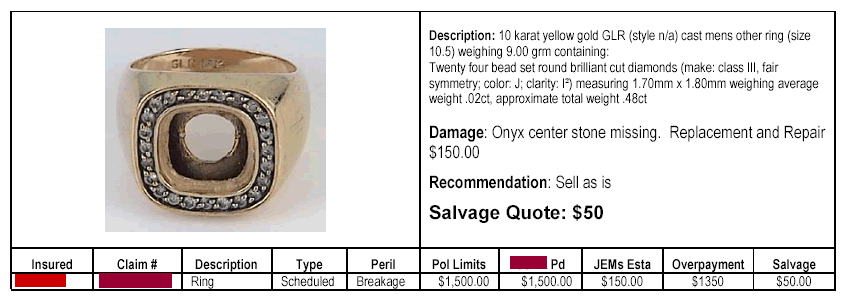
The onyx center stone is missing from the ring. The carrier paid out the full policy limit of $1,500, but the stone could have been replaced for one tenth that amount. Insurer’s overpayment: $1,350
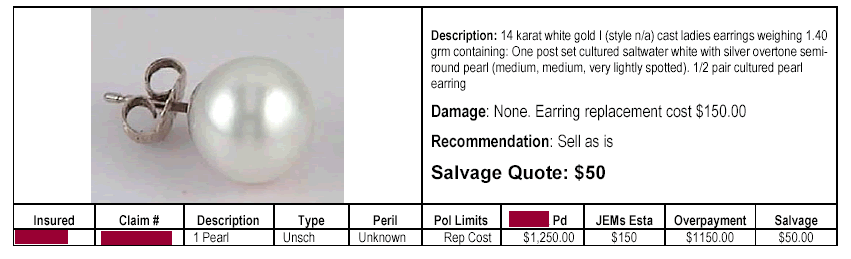
A pearl earring was lost. The selling jeweler said that a mate couldn’t be made, though anyone can see from the picture that this is not true. The insurer paid out $1,250 for a total loss, but a duplicate of this simple earring could be made for $150. Insurer’s overpayment: $1,100.
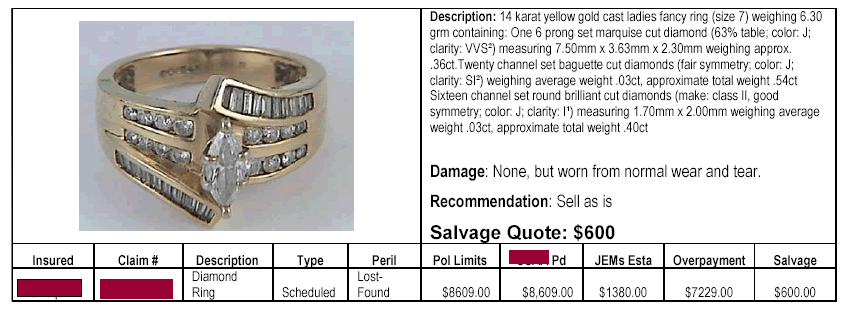
A ring set with diamonds was lost, then found after the claim was paid. The insurer paid out the full $8,609. The ring could have been replaced for $1,380, and in fact it should retail for only about $2,000—far below its insured value. Insurer’s overpayment: $7,229.

What’s left over after a partial loss holds many clues for saving on settlements. With a total loss, you have no choice but to work from the appraisal and other documents. But with a partial loss, always have the damaged jewelry inspected. Ask for a detailed description of the remaining jewelry, and compare this description with the appraisal.

FOR AGENTS & UNDERWRITING

In your review of loss files, use salvage as a measure for appraisal accuracy. If the description of the damaged piece does not match the description on the original appraisal, this may indicate that appraisals on the policyholder’s other scheduled jewelry are equally inaccurate and unreliable. If so, this is a good time to recommend that the other jewelry be appraised by a qualified appraiser, such as a Certified Insurance Appraiser™ in jewelry.

FOR CLAIMS

Always have damaged jewelry inspected. Ask for not just a repair estimate but also for a detailed description of the remaining jewelry, and compare this description with the appraisal. Such a comparison may reveal a value far below the insured valuation.

Do not automatically go to the original selling jeweler for assessment of damage. Remember he is in the business of selling (rather than repairing) jewelry. If he knows you’ve chosen him to either repair or replace, he will most likely recommend replacement.

With salvage jewelry, get quotes from several jewelers before selling. Jewelers often expect insurers to be easy marks in this area (see May 2000 IM NEWS) and may take advantage of your lack of jewelry knowledge.
 

Subscribe to Jewelry Insurance Isssues

Sponsored by Jewelry Insurance Brokerage of North America

For Insurance professionals: 8 hours CE credit. Jewelry insurance is the key to cross-selling opportunities to commercial insurance. Learn how to improve loss ratios and take advantage of value-add services for your agency.