
The Lure of Colored Diamonds

The vast majority of diamonds in nature are colorless or near-colorless. Until recently, most people weren’t even aware that colored diamonds exist. Technology is changing that.
Intensely colored diamonds, called fancies, used to be the preserve of only the very rich. Diamonds in vivid blues, greens, yellows, pinks, even purples, are extremely rare in nature and priced accordingly. Typical customers for such stones were informed consumers, collectors of diamonds, who knew what they wanted and where to seek it.
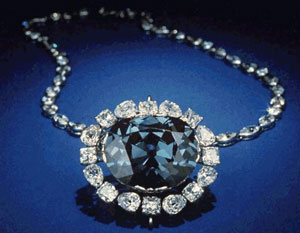
The world-famous Hope Diamond
These days, colored diamonds are carried by more retailers and in a much wider price range. This is due to two developments: new treatments to change the color of diamond, and the manufacture of synthetic diamond. This issue of Jewelry Insurance Issues deals with improving the color of existing diamonds; next month we’ll discuss synthesizing fancy colored diamonds.
From Plain to Fancy
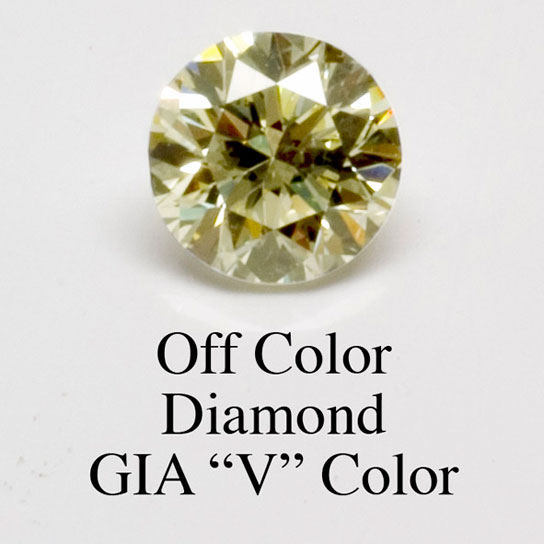
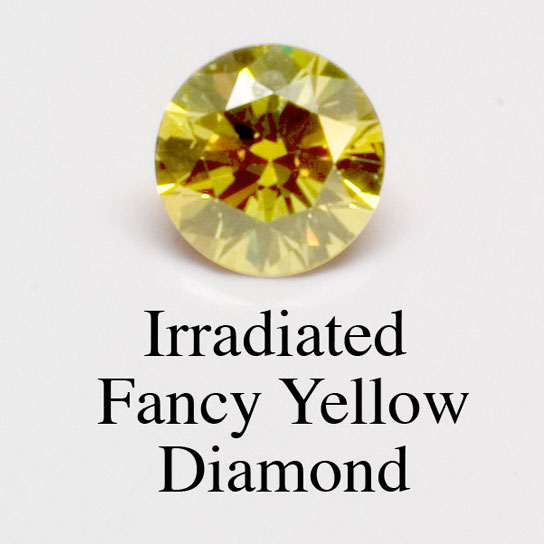
To produce a vividly colored diamond, technicians usually begin with a slightly tinted diamond, a diamond that is yellowish or brownish, and would not be appealing as a colorless diamond. They subject the diamond to one or more treatments to alter its color.
 |
 |
Irradiation
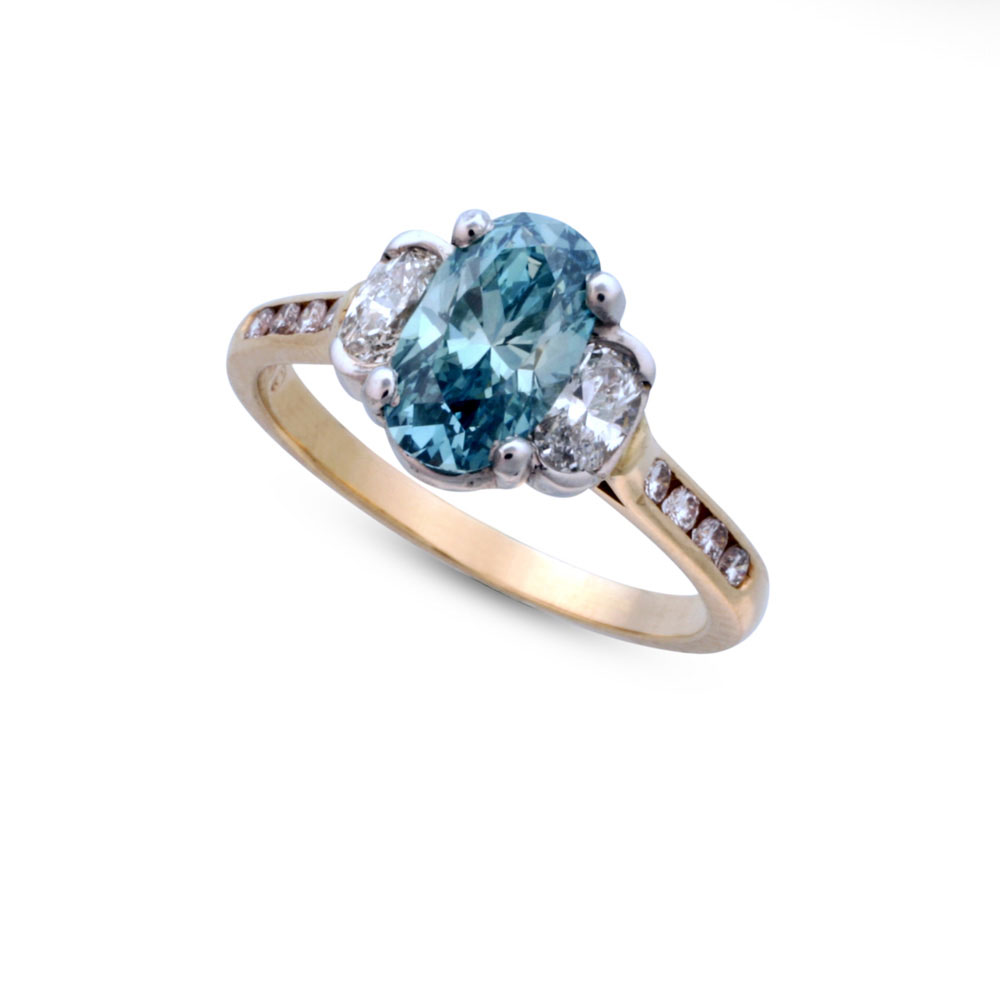
Irradiated blue diamond
Experiments using irradiation to change diamond’s color began in the early 1900s. The early process produced some good colors but left the gems strongly radioactive for years — not an agreeable trade-off! Current methods, which must meet stringent U.S. safety standards, leave no residual radioactivity.
Irradiation produces green and blue colors, and additional treatments can create yellows, oranges, and reds. The colors are attractive, but there is some question about their permanency. Irradiated diamonds are guaranteed to survive “normal, everyday wear and tear,” but the color may change when the stone is exposed to high heat, such as produced by a jeweler’s torch when he is setting the stone. Irradiated blue stones typically become yellowish green when subjected to such heat, and this change is irreversible.
The irradiation treatment can be detected by a jeweler using gem lab equipment.
HPHT
High pressure high temperature (HPHT) is a more recent option for coloring diamonds. This process is used both to de-colorize off-color diamonds (change a diamond from H to F, for example) and to add rich colors. HPHT costs more than irradiation, but it produces colors that are stable even under intense heat.
A variety of tests have shown the HPHT color treatment to be permanent.
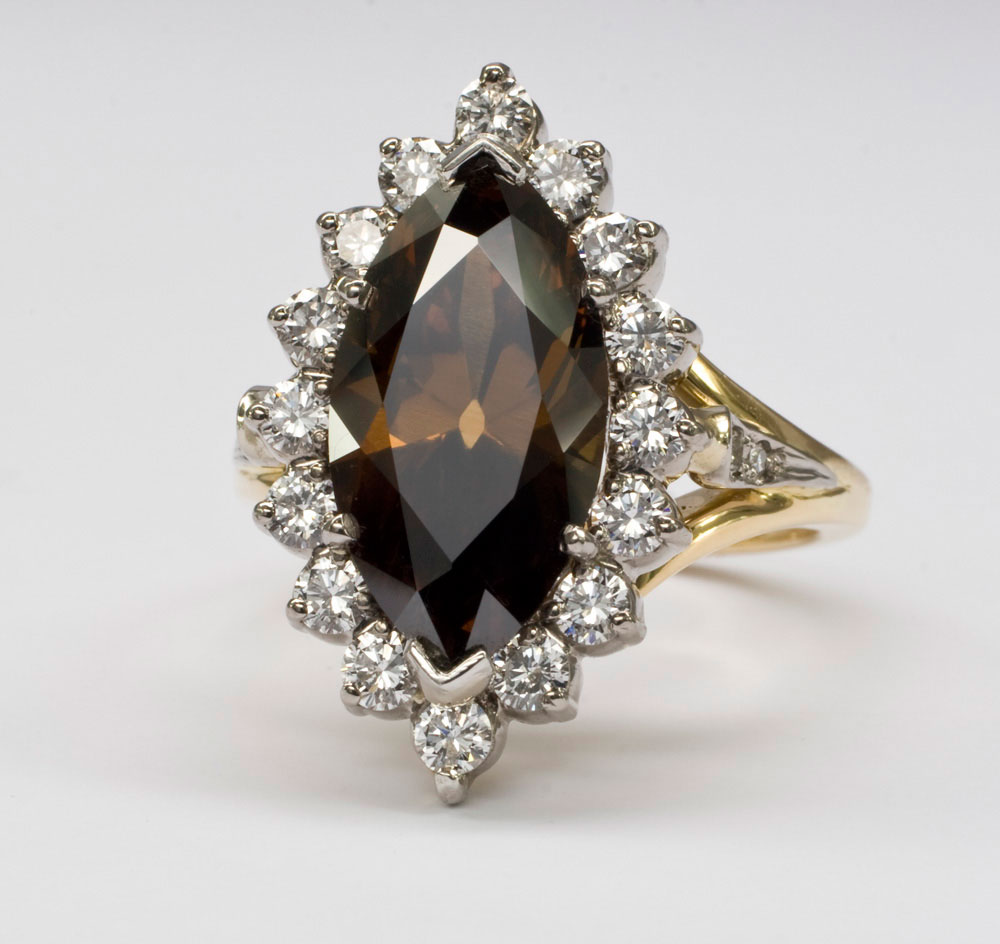 |
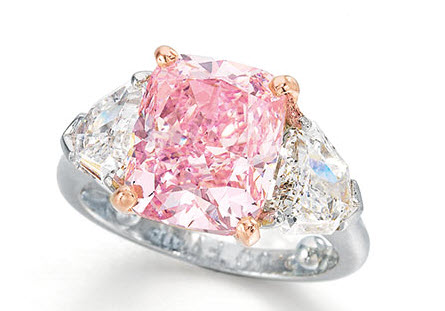 |
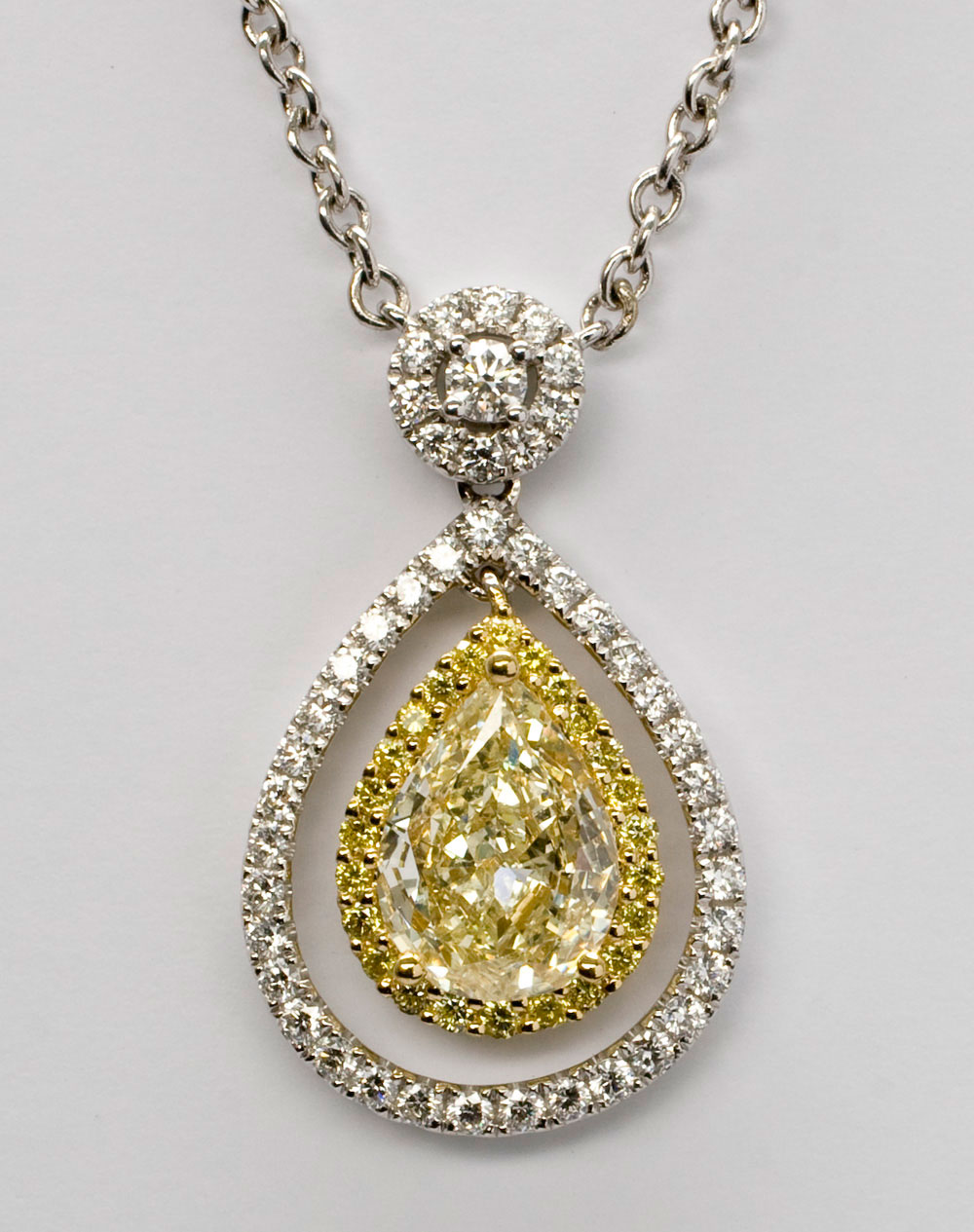 |
Natural fancies (not color-enhanced) |
||
Disclosure vs. Marketing
Many jewelry industry professionals are wary because the HPHT treatment is not as easy to recognize as irradiation. Here, detection requires advanced testing with instruments beyond what would be found in the average jeweler’s lab. It’s possible that HPHT-treated diamonds could pass as natural fancies in the marketplace, with consumers and even retailers being fooled and overcharged.
From the standpoint of consumers, jewelry retailers and insurers, disclosure of the treatment is crucial. Some manufacturers, though, are reluctant to have the process seen as a treatment (requiring disclosure).
Bellataire, for example, uses an HPHT process developed by General Electric. Bellataire markets each treated gem as “a gift of nature, restored by man to its intrinsic beauty.” The story on its brochure is that these diamonds began perfect and colorless but during their “turbulent journey through the earth’s crust” were “subjected to volcanic forces that disguised their essential beauty.” Bellataire thus claims a role comparable to that of an art restorer, returning these gems to their original state.
The company’s nod to disclosure is that all its HPHT-treated diamonds are laser-inscribed on the girdle with the names GE-POL and Bellataire. (The Gemological Institute of America will not grade/certify an HPHT-treated diamond unless the girdle is laser-inscribed.) However, when a stone is in a setting, an inscription on the stone’s girdle is not visible. In any case, laser-inscriptions can be easily removed.
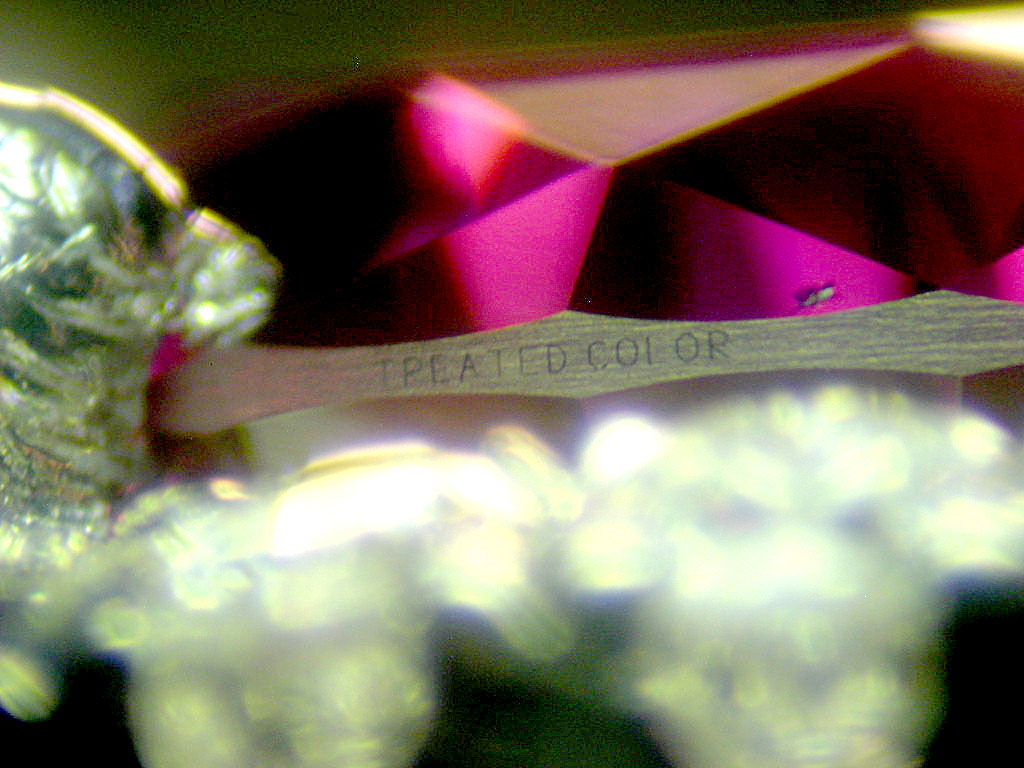
Laser inscription on color-treated stone
Color-enhanced fancy colored diamonds may be a good buy, but the treatment should be disclosed. Customers less familiar with shopping for gems may go to an untrained or untrustworthy retailer or may be attracted to a “bargain” that they have no way of evaluating. The insurer must be sure the appraisal for a fancy colored diamond specifically describes the stone, including treatments, so its value can be verified.
FOR AGENTS & UNDERWRITERS
For fancy colored diamonds, a price that is “too good to be true” is a major red flag. Do ITV (insurance to value) calculations to check for a major discrepancy between the purchase price and replacement cost. JEMs software makes ITV calculations easy and guards against fraud.
Be sure the appraisal for a fancy colored diamond
- states that the gem is natural and untreated, OR
- states that it is treated and lists all treatments.
Always insist on two appraisals when insuring a fancy colored diamond. At least one should be written by a jeweler who is a Graduate Gemologist and a Certified Insurance Appraiser™.
A fancy should have a GIA Gem Trade Lab report (diamond certificate).
Irradiation and HPHT are treatments that produce color in diamonds. However, the difference in value is huge between a natural fancy and one whose color comes from such treatments.
Be aware that color produced by irradiation may change if the stone is subjected to high heat, as by a jeweler’s torch .
FOR ADJUSTERS
If the appraisal was not written on ACORD 78/79, use ACORD 18 to verify that all necessary information was given on the appraisal.
For fancy colored diamonds, a price that is “too good to be true” is a major red flag. Do ITV (insurance to value) calculations to check for a major discrepancy between the purchase price and replacement cost. JEMs software makes ITV calculations easy and guards against fraud.
In settling claims for fancy colored diamonds, be wary — especially if
- the appraisal does not list treatments, yet does not state that the gem is untreated;
- the only appraisal available is one written by the seller;
- a brand name appears. (Brands can have significance within the industry. Bellataire, for example, signifies an HPHT-treated diamond. This name is laser inscribed on the diamond’s girdle.)
If any of the above apply, it may be useful to consult a jewelry insurance expert before settling the claim. The expert, working on your behalf, can help determine whether the valuation is accurate.
©2000-2025, JCRS Inland Marine Solutions, Inc. All Rights Reserved. www.jcrs.com
Subscribe to Jewelry Insurance Issues
